Beyond New Year’s Resolutions: How Intentions Create Change That Actually Lasts
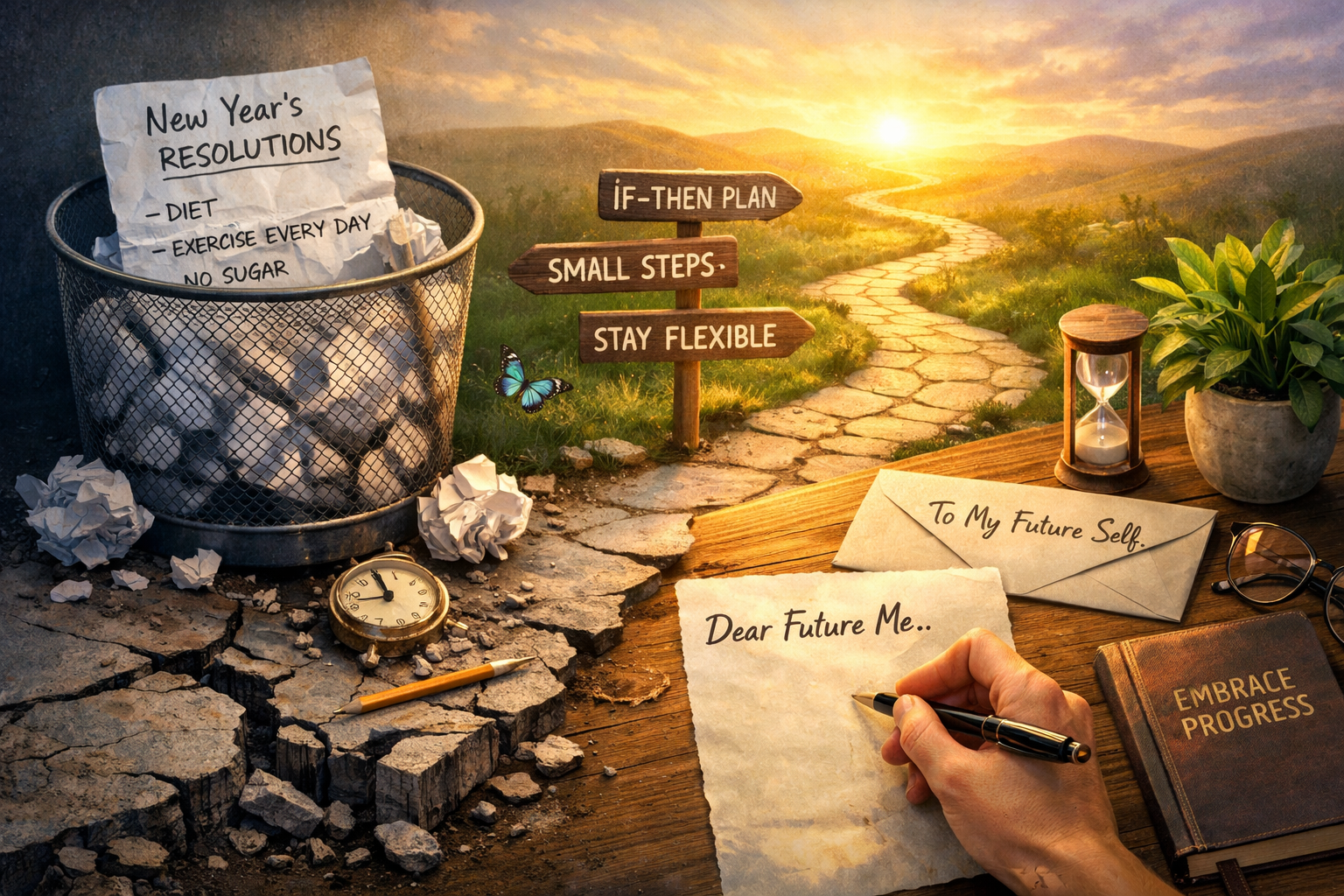
Every January, something powerful happens.
The calendar flips, and suddenly it feels like we’ve been handed a clean slate, a psychological boost often called the fresh-start effect. New beginnings spark motivation, hope, and a genuine desire to do things differently. But for many people, that energy fades faster than expected. By the time February rolls around, frustration and self-blame often replace excitement.
If you’ve ever wondered “Why can’t I stick with my goals?”, the problem isn’t you. It’s the system we’ve been taught to use.
Traditional New Year’s resolutions rely on rigid rules, perfection, and willpower. Research consistently shows that these approaches are fragile. Long-term follow-through is surprisingly rare, and when people slip up (because we’re human), many give up entirely. This cycle, starting strong, falling off, and feeling like a failure can quietly erode confidence and self-trust.

There is another way forward, one grounded in flexibility and compassion.
Why Resolutions So Often Fall Apart
Most resolutions are built on avoidance and pressure:
“Stop eating junk food.”
“Quit procrastinating.”
“Don’t be so anxious.”
Goals framed around stopping or eliminating behaviors tend to backfire. Our brains respond better to direction than restriction. When success is defined as “never messing up,” one hard day can feel like total failure. That all-or-nothing mindset makes quitting feel logical, even inevitable.
This isn’t a motivation issue. It’s a design issue.
Shift From Resolutions to Intentions
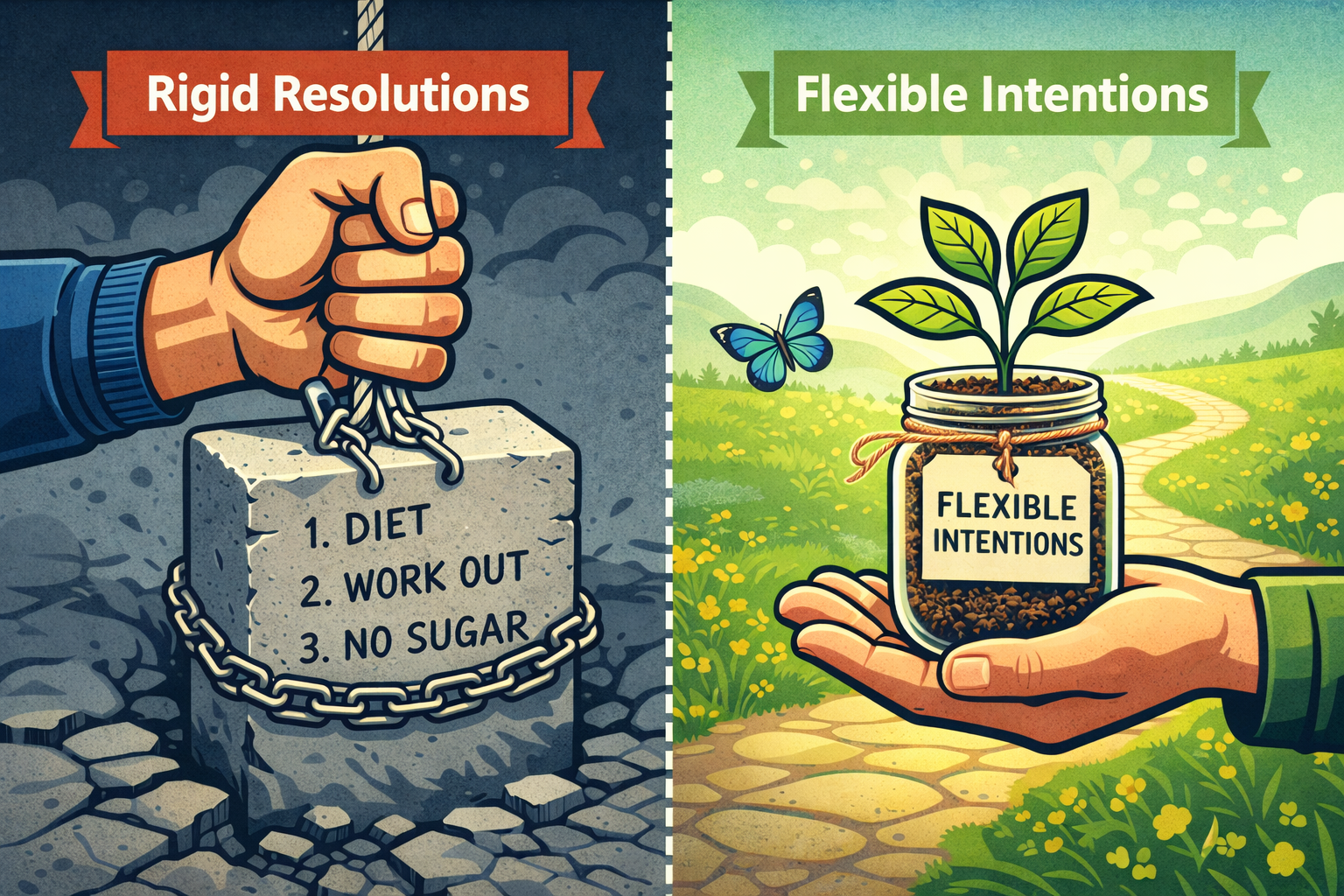
Instead of rigid promises, intentions work like a compass.
An intention doesn’t demand perfection, it offers direction. Rather than asking, “Did I succeed or fail?” intentions ask, “Am I still moving toward what matters?”
Intentions focus on process, not punishment. They allow room for life to happen while still keeping your values in view.
Many people find it helpful to choose a single guide word for the year, a word that reflects how they want to live, not just what they want to do.
Some examples:
Compassion – responding to yourself with kindness instead of criticism
Steady – prioritizing consistency over intensity
Explore – staying curious rather than rigid
Enough – releasing the pressure to constantly prove your worth
This word becomes an anchor you can return to when motivation wavers.
Why “Approach” Goals Work Better Than “Avoidance” Goals
Another powerful shift comes from how goals are worded.
Goals focused on what you want to add or move toward are far more effective than goals centered on what you want to avoid.
For example:
Instead of “stop eating junk food,” try “add more nourishing foods to my meals.”
Instead of “don’t isolate,” try “connect with one supportive person each week.”
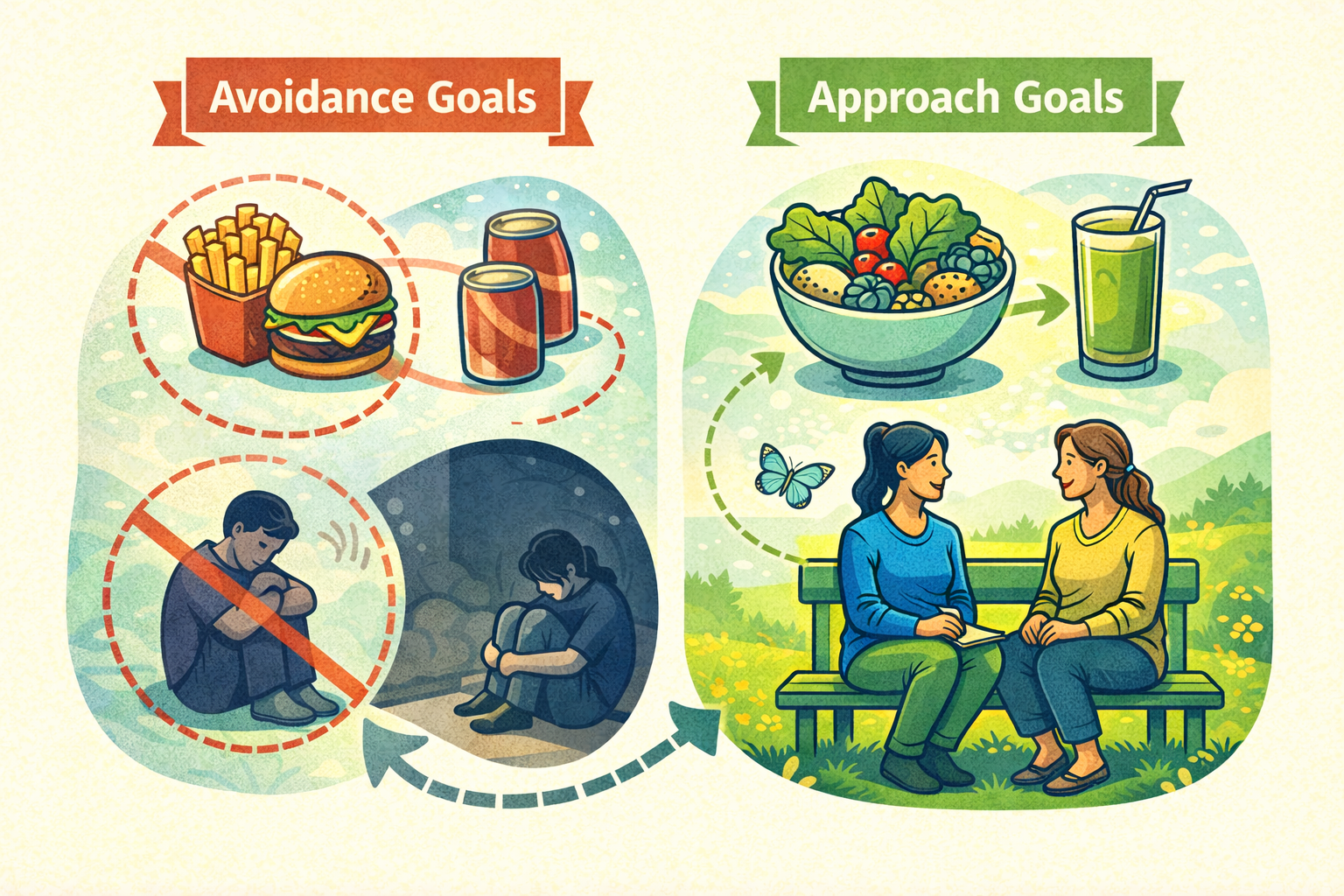
Approach-based goals give your brain a clear target. They’re motivating, actionable, and emotionally safer, especially for folks who struggle with shame, anxiety, or burnout.
You’re not fighting yourself; you’re guiding yourself.
The Power of Writing to Your Future Self
One surprisingly effective practice is writing a letter to your future self.
This isn’t about strict planning or pressure, it’s about reflection and intention. When you write honestly about what you hope for, what you’re learning, and what you want to protect, your brain stores those priorities more deeply.

Many people are surprised when they reread these letters months or years later and realize how much growth happened quietly, without force.
Writing to your future self can help you:
Clarify what truly matters right now
Capture this season of your life with honesty
Track growth over time
Reconnect with motivation during difficult moments
You’re creating a bridge between who you are today and who you’re becoming.
Turn Intentions Into Action With “If–Then” Plans
Intentions give direction, but structure helps carry them into daily life.
That’s where if–then plans come in.
An if–then plan links a specific situation with a specific action:
“If it’s 5:00 PM, then I’ll take a 20-minute walk.”
“If I notice I’m spiraling, then I’ll pause and take three slow breaths.”
These plans reduce decision fatigue and help behaviors become automatic over time. Gentle reminders, like phone alerts or visual cues work best when they’re consistent but not overwhelming. The goal isn’t control; it’s support.
Create Rituals That Feel Meaningful (Not Punishing)
For some people, rituals offer grounding and symbolism that logic alone can’t provide.
Rituals can be simple and personal:
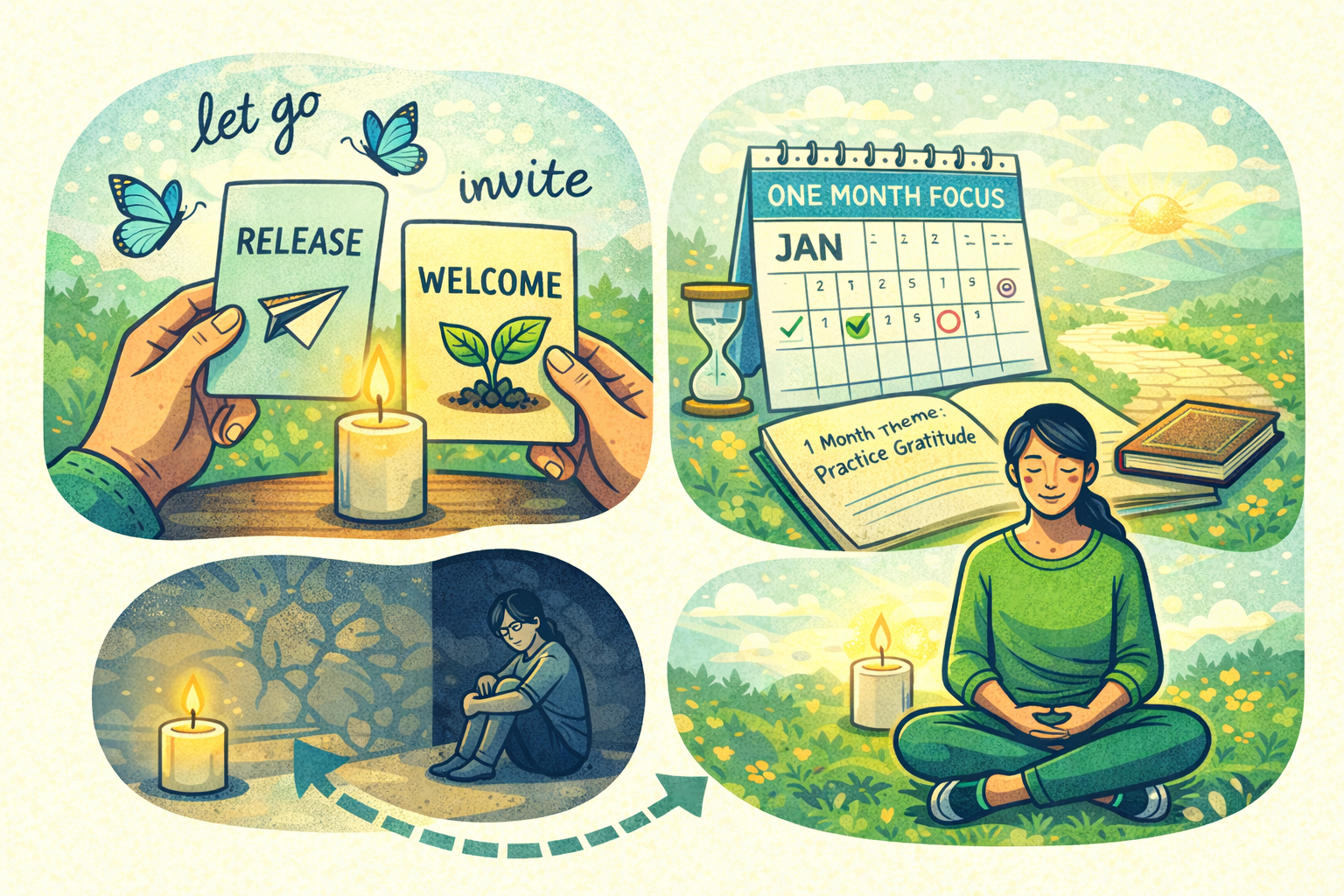
Choosing a word to release and a word to welcome
Marking transitions with journaling, candles, or quiet reflection
Setting short-term intentions like “one-month focuses” instead of year-long pressure
Rituals signal to your nervous system that change can be intentional, safe, and self-directed.
Moving Forward With Compassion
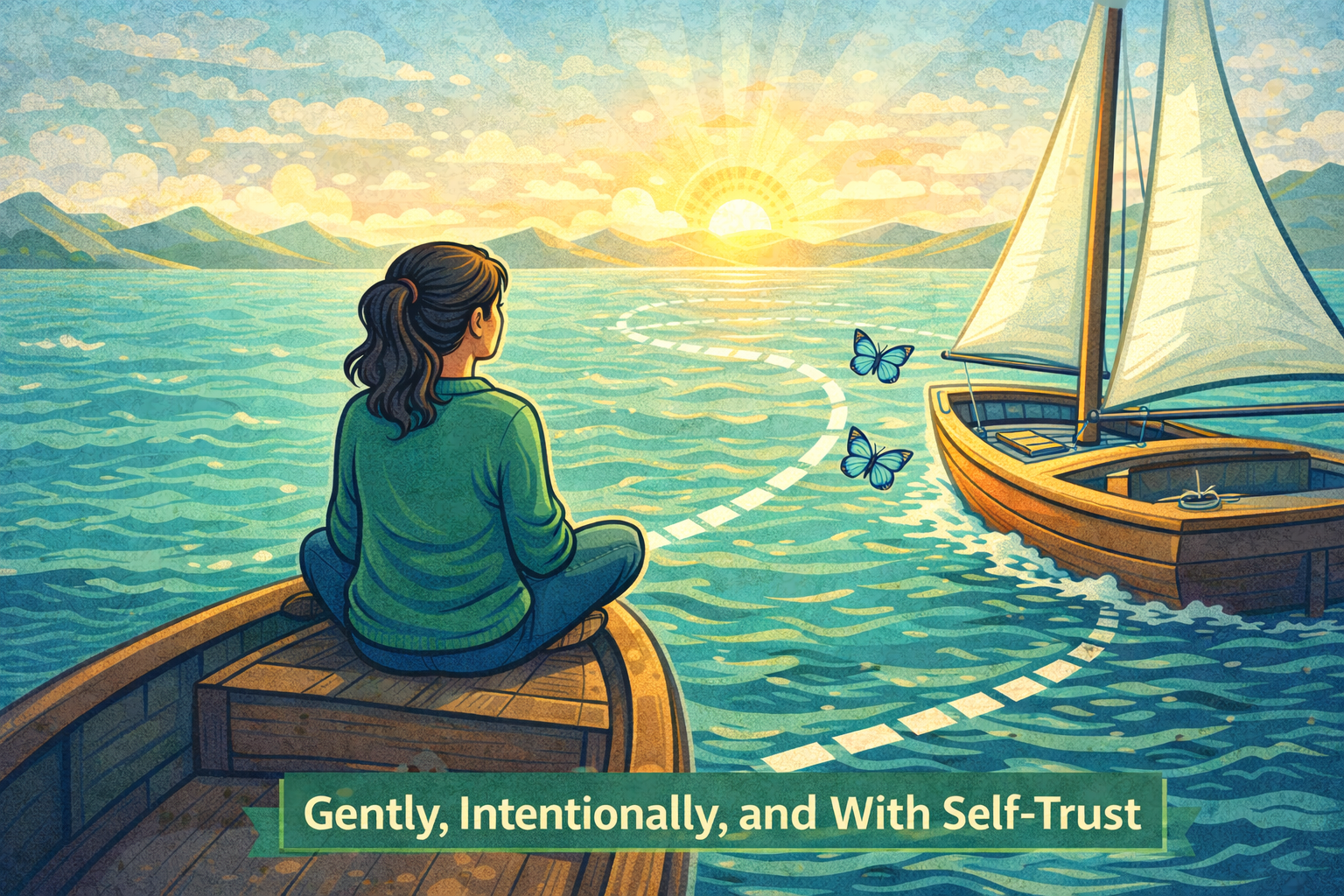
Growth isn’t linear. It never has been.
Think of rigid resolutions like an anchor, once the waves hit hard enough, something snaps. Intentions, on the other hand, act more like a rudder. You may drift, slow down, or get pushed off course, but you can always steer back toward what matters.
This year doesn’t need to be about perfection. It can be about alignment. It can be about learning. It can be about choosing yourself, again and again.
And that kind of change tends to last.
Final Thoughts: Let Change Be Human
Real growth doesn’t come from forcing yourself into a new version overnight. It comes from showing up again and again, sometimes confidently, sometimes uncertainly and choosing to stay connected to what matters.
Intentions give you permission to adjust without giving up. They remind you that progress can be quiet, nonlinear, and still deeply meaningful. Even small shifts in how you speak to yourself, how you set goals, or how you respond after a hard day can create lasting change over time.
You don’t need a perfect plan.
You don’t need to “get it right” the first time.
You just need a direction that feels aligned and the willingness to keep steering.
If You Need Support Along the Way
If this season feels heavy, overwhelming, or lonely, support can make a real difference. Therapy isn’t about fixing you, it’s about giving you space to breathe, reflect, and build tools that fit your life.
If this blog resonated with you, Counseling in the Holler, LLC is here to walk alongside you. I offer trauma-informed counseling grounded in mindfulness, DBT, and self-compassion, with a focus on helping clients move forward at a pace that feels safe and sustainable.
You don’t have to navigate change alone, not in your holler, and not in your heart.