Resentment: How It Weighs on Your Heart and How to Begin Letting It Go
Resentment can quietly damage your mental health, relationships, and overall well-being. Whether it stems from betrayal, unmet expectations, unresolved conflict, or feeling unappreciated, holding onto resentment often leads to chronic stress, emotional distance, anxiety, and burnout. Many people don’t realize that unresolved resentment keeps the nervous system stuck in survival mode, making it harder to trust, communicate, and feel at peace.
In this blog, you’ll learn how to identify hidden resentments, understand how they impact your emotional health, and begin working toward acceptance and forgiveness in a healthy, realistic way. We’ll walk through practical, therapist-recommended steps for processing anger, setting boundaries, reducing rumination, and rebuilding emotional freedom, without minimizing your pain or excusing harmful behavior.
If you’re feeling stuck in bitterness, tension, or emotional exhaustion, this guide offers compassionate tools to help you move forward.
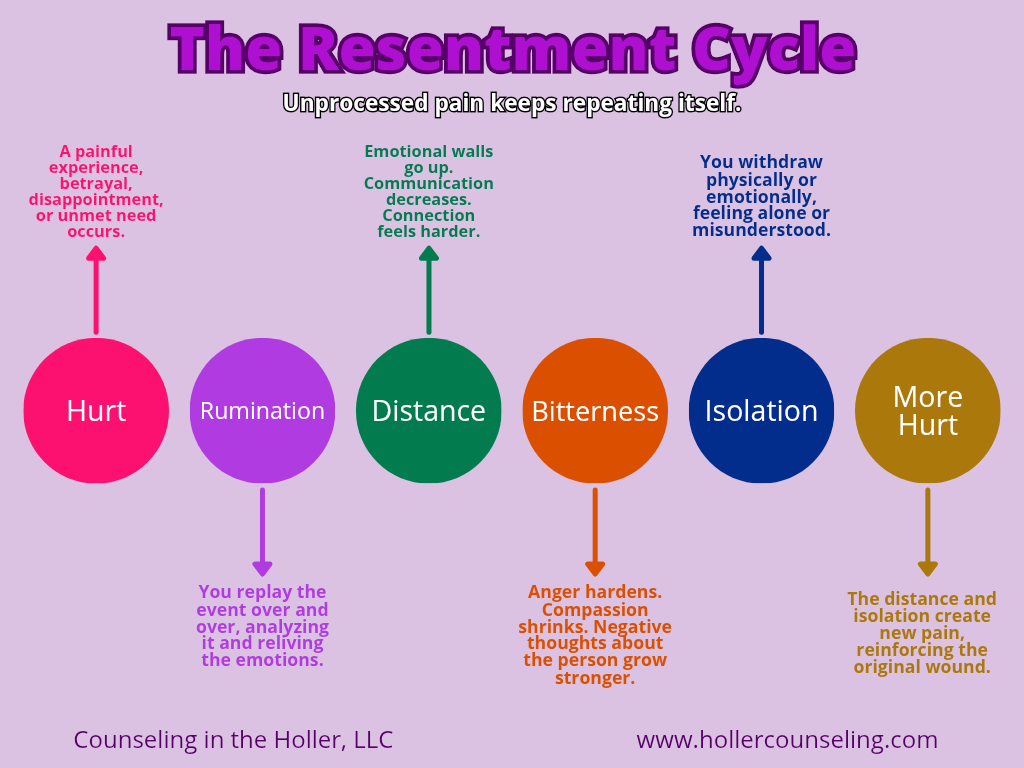
Resentment rarely shows up all at once. It builds slowly. A hurt that wasn’t addressed. An apology that never came. An expectation that went unmet. A betrayal that changed how safe you feel.
Over time, that hurt hardens. It shifts from pain into bitterness. From disappointment into distance. From anger into emotional exhaustion.
Resentment is heavy and it costs more than most people realize.
The good news? You can work through it. Not by pretending it didn’t happen. Not by minimizing your pain. But by processing it in a way that leads to freedom instead of burnout.
Let’s walk through how.
What Resentment Really Is
Resentment is unresolved anger mixed with hurt and meaning-making.
It often sounds like:
“They should have known better.”
“I always have to be the one.”
“It’s not fair.”
“Why wasn’t I enough?”
Resentment isn’t just about what happened. It’s about what the event meant to you.
It may have meant:
I’m not valued.
I’m not safe.
I don’t matter.
I can’t trust.
When those meanings go unexamined, resentment grows roots.
“Resentment begins as protection, but it can become a prison.”
How Resentment Affects You
Emotionally:
Chronic irritability
Anxiety or hypervigilance
Intrusive or looping thoughts
Emotional numbness
Relationally:
Distance or withdrawal
Score-keeping
Passive-aggressive behavior
Escalating arguments
Physically:
Chronic resentment keeps your stress response activated. Research links long-term unforgiveness and anger to increased stress reactivity and poorer cardiovascular health (Worthington & Scherer, 2004).
Resentment doesn’t just live in your thoughts. It lives in your nervous system.
A Step-by-Step Guide to Working Through Resentment
This is not a “forgive and forget” guide. This is a process guide. Take your time with it.
“Pause Before We Go Deeper
Take one slow breath in for 4…
And out for 6…
You deserve calm while working through hard things.”
Step 1: Identify the Specific Hurt
General resentment (“I’m just tired of everything”) is hard to process. Specific resentment can be worked through.
Ask yourself:
What exactly happened?
What moment still replays in my mind?
What words or actions cut the deepest?
What did I need that I did not receive?
Write it down. Clarity reduces emotional fog.
Step 2: Identify the Deeper Emotion Under the Anger
Resentment is often a shield.
Underneath it, you may find:
Sadness
Fear
Shame
Loneliness
Feeling unchosen
Feeling unimportant
Reflection questions:
If I wasn’t allowed to feel angry about this, what would I feel instead?
What did this situation say about me?
What did I lose because of this event?
“Anger is often the bodyguard for deeper pain.”
Step 3: Notice the Cost of Holding It
Resentment feels protective. But protection can become a prison.
Ask:
How is holding onto this affecting my sleep?
How is it affecting my body?
How is it affecting my relationships?
How much mental space does this take up daily?
Is this helping me heal or keeping me stuck?
This step is about honest assessment, not self-judgment.

Step 4: Separate Accountability from Bitterness
You can hold someone accountable without holding onto resentment.
Consider:
Have I clearly communicated how this hurt me?
Have I set boundaries?
Am I trying to control, punish, or protect?
Boundaries say:
“I need this to feel safe moving forward.”
Resentment says:
“You hurt me, and I’m going to carry that forever.”
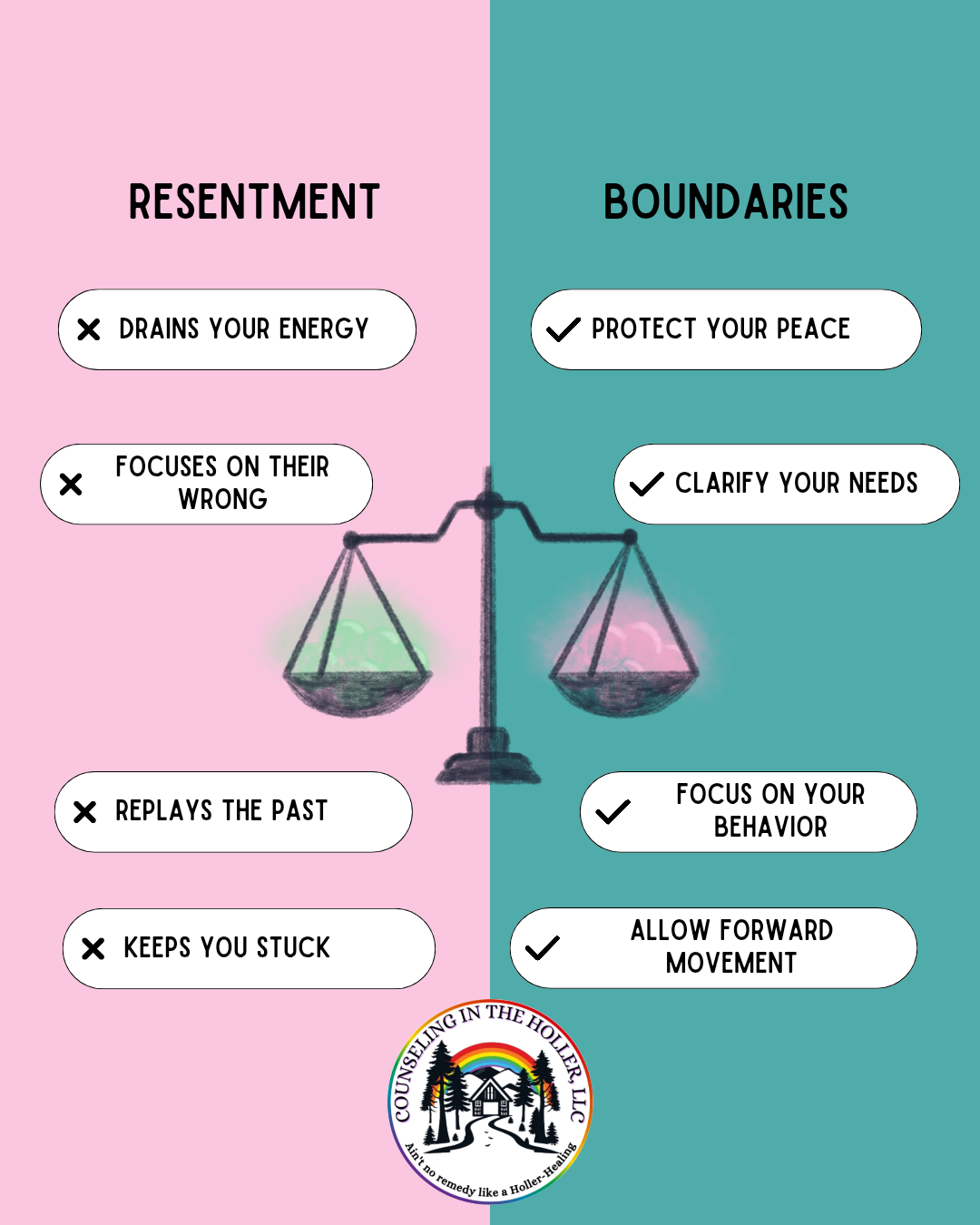
Only one of those leads to peace.
Step 5: Practice Emotional Processing (Not Suppression)
Here are realistic tools you can use:
1. The Unsent Letter Exercise
Write a letter expressing:
What hurt
What it cost you
What you needed
What you wish had happened
You do not have to send it.
This allows your nervous system to complete unfinished emotional expression.
2. Scheduled Processing Time
Instead of ruminating all day, set a 15-minute “resentment processing window.”
When intrusive thoughts pop up outside that window, tell yourself:
“I’ll think about this at 7pm.”
This builds cognitive control over rumination.
3. The “Both/And” Reframe
Practice complexity:
“They hurt me AND they are human.”
“I was wronged AND I want peace.”
“I can forgive AND still have boundaries.”
Rigid thinking fuels resentment. Flexible thinking softens it.
4. Nervous System Regulation
Since resentment activates stress responses, calming the body matters.
Practical tools:
Slow breathing (inhale 4, exhale 6)
Walking outdoors
Progressive muscle relaxation
Guided meditations (free on YouTube, Insight Timer, or UCLA MARC website)
“You can forgive and still require change.”
Step 6: Moving Toward Acceptance
Acceptance does not mean approval.
It means:
“This happened. I cannot change the past. I can decide how much power it has over my present.”
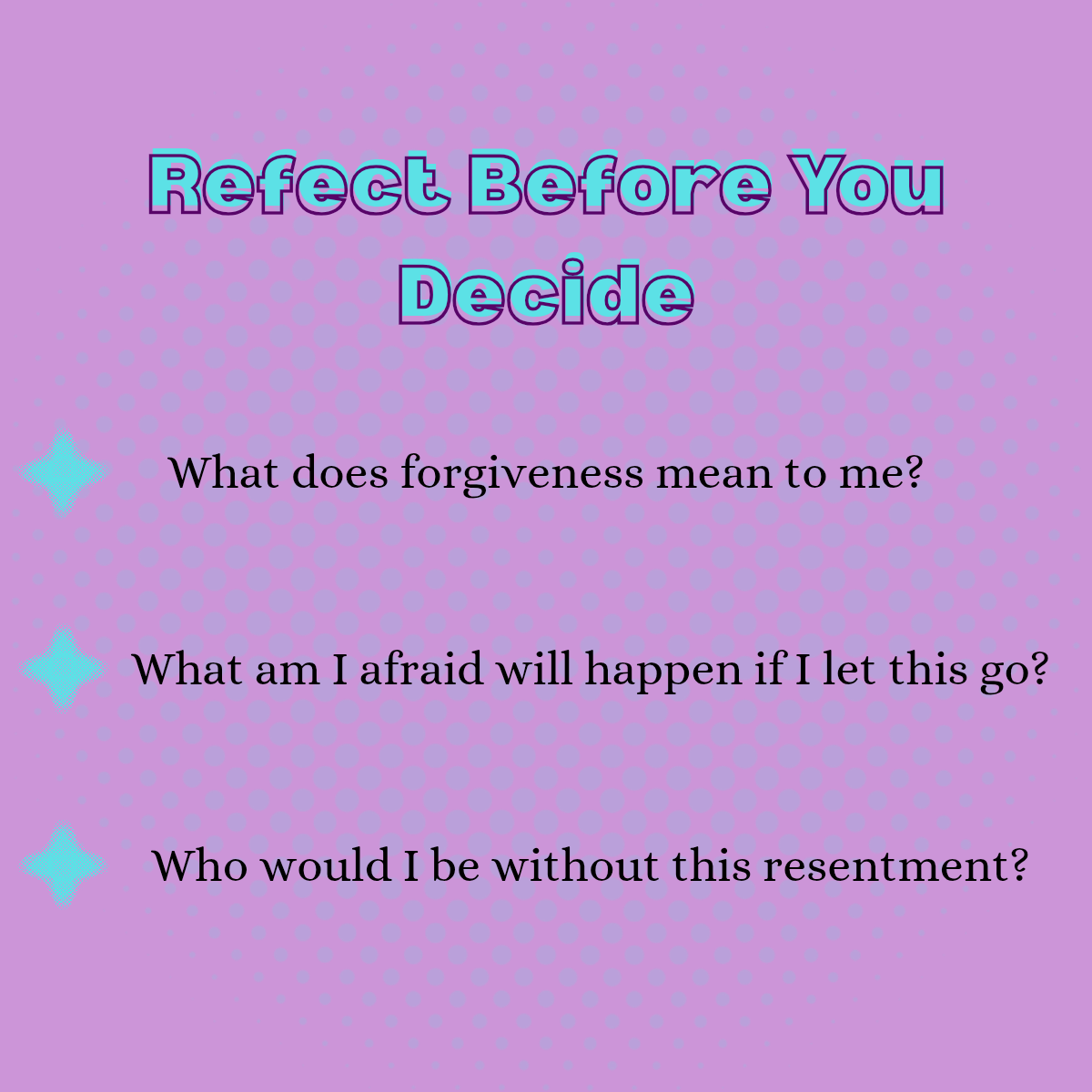
Reflection questions:
If I released this resentment, who would I be?
What would I have more energy for?
What am I afraid would happen if I let this go?
What does forgiveness mean to me — personally?
Working Toward Forgiveness (Gradually)
Research suggests forgiveness is associated with better mental health outcomes, lower anxiety, and improved relationship satisfaction (Toussaint, Worthington, & Williams, 2015).
But forgiveness is a process, not a switch.
You might move through:
Acknowledging the hurt
Deciding you don’t want to carry bitterness
Developing empathy (if appropriate)
Releasing the emotional hold, even if trust rebuilds slowly
You are allowed to require change.
You are allowed to choose peace for yourself.
You are allowed to forgive slowly.
Final Reflection
Resentment begins as protection. Healing begins with courage.
Ask yourself:
What am I protecting?
Is this protection still serving me?
What would emotional freedom look like six months from now?
You deserve peace, not just survival.
When to Seek Extra Support
Consider professional help if:
Resentment is tied to betrayal trauma
You experience obsessive thinking
You feel stuck in hypervigilance
Your relationship feels chronically hostile
Your anxiety or depression is increasing
Therapy can provide structured support for emotional processing, boundary-setting, and trauma repair.
If this blog resonated with you, Counseling in the Holler, LLC is here to walk alongside you. We offer trauma-informed counseling grounded in mindfulness, DBT, and self-compassion, with a focus on helping clients move forward at a pace that feels safe and sustainable.
You don’t have to navigate change alone, not in your holler, and not in your heart.
Ain’t no healing like a Holler-Healing, especially when it starts with telling the truth.
References
Toussaint, L., Worthington, E. L., & Williams, D. R. (2015). Forgiveness and health: Scientific evidence and theories relating forgiveness to better health. Handbook of forgiveness, 2, 39–52.
Worthington, E. L., & Scherer, M. (2004). Forgiveness is an emotion-focused coping strategy that can reduce health risks and promote health resilience. Psychology & Health, 19(3), 385–405. https://doi.org/10.1080/0887044042000196674
Neff, K. D. (2011). Self-compassion: The proven power of being kind to yourself. William Morrow.
Kabat-Zinn, J. (1990). Full catastrophe living. Dell Publishing.