You're Not Alone in the Holiday Haze: Coping with Stress and Family Expectations
Ah, it’s that time of year again. The lights are going up, the carols are starting, and the "perfect" holiday vision is already playing in our minds like a Hallmark movie. But here's a truth I want to share from the clinician’s chair: for many of us, the holidays aren’t full of magic and merriment, they’re full of stress, pressure, and expectations.
If you’re feeling more frazzled than festive, more anxious than at ease, you are absolutely not alone. Research shows that 89 % of people say that things like money concerns, missing loved ones, or anticipating family conflict cause them stress during the holidays. (American Psychological Association)
So, let’s set aside the fluffy “everything must sparkle” messaging for a minute and talk about something more useful: how to manage holiday stress in a way that honors you, your limits, your emotions, your values.

The Art of Realistic Expectations: Let Go of “Perfect”
One of the biggest stressors is the belief that everything should be magical, flawless, and Instagram-worthy. Instead, let’s trade “should” for a gentle dose of self-compassion.
Audit Your “Must-Dos” (The 80/20 Rule)
Grab your holiday to-do list (gifts, decorating, baking, events).
Ask: Which ~20% of those activities bring ~80% of the joy? Focus on that core 20%.
Let the rest go. It’s okay to buy cookies instead of baking, use paper plates instead of china, or skip the elaborate card this year. In fact, some research recommends simplifying schedules and prioritizing what you enjoy. (UC Davis Health)
Embrace the “Good Enough”
Your dinner table doesn’t have to be magazine-perfect; your decorations don’t need to outshine the neighbors.
When you catch yourself striving for perfection, pause and say, “This is good enough.” A widely cited tip from Johns Hopkins Medicine’s wellness blog: “Accept imperfection.” (Hopkins Medicine)
Ask: What matters most to you? Quality time? Peaceful mornings? Let that guide your priorities.
The Financial Guardrail
Let’s talk budgets, because money stress is a major trigger. (American Psychological Association)
Before the shopping begins: Write down a firm gift budget and stick to it.
Consider creative alternatives:
One gift exchange within a family group instead of many.
Homemade gifts or experience gifts (a hike with a friend, a day outside, cooking together).
These aren’t “less than”, they can be more meaningful.
Bonus: A clear budget helps your January self say “thank you” instead of “yikes.”
Setting Boundaries That Protect Your Peace
Boundaries are not mean. They are an act of self-care, a way to respect yourself and everyone around you. Especially when family dynamics, social calendars, and emotional triggers are amplified.
Master the “Gracious No”
You don’t owe a complicated explanation. A simple “Thanks for the invite, but I’m going to pass this year” is enough.
If you still want to attend but limit time: “I’ll be there until 7:00 PM, then I’ll head home.”
Clear communication = fewer unspoken resentments. (Foresight Mental Health)
Pre-Plan for Triggers
Know your “button-pushers” (topics, extended family, old patterns).
Have a neutral response ready: “I’d rather talk about something else. Did you see the latest movie?”
And you can physically remove yourself: “Excuse me, grabbing water/stepping out for air” is fair. Research supports intentional exit plans in high-stress family scenarios. (UT Southwestern Medical Center)
Communicate—Don’t Expect Telepathy
If you need help from someone (partner, sibling, friend), ask clearly.
Example: “Could you take on decorating the lights while I finish the baking?”
When needs are unspoken, we either hope for someone to act (and feel resentful) or end up doing it all. Let’s avoid both.
Anchor Yourself with Self-Care and Routine
When your life is going “holiday-crazy,” your routine becomes your lifeline. Don’t toss it overboard.
Non-Negotiable Basics
Sleep: Aim for ~7+ hours. Low sleep = higher emotional vulnerability. (UC Davis Health)
Movement: Even 15 minutes of brisk walking outdoors can boost mood. (UCLA Health)
Nutrition & hydration: Enjoy treats, yes, but balance them with protein, veggies, and water. Avoid using food or drink as escape.
The Power of the Pause (Mindfulness & Grounding)
Mindfulness practices can reduce holiday stress, especially when it’s sensory overload. (Hopkins Medicine)
Micro-Practices You Can Do Right Now:
Mindful Hand Wash: Turn washing your hands into a 60-second reset, focus on the water temperature, scent of soap, lather texture, sound of water.
Leaves on a Stream (Defusion Technique): When racing thoughts show up (“I’ll mess it all up this holiday”), imagine each thought is on a leaf floating down a stream, watch it drift away. This helps you see thoughts as just mental events, not facts.
Mindful Walking: Slow down, even 10 paces across a room counts. Feel your feet on the floor, heel-to-toe. Sync breath: inhale for three steps, exhale for three. Anchor in your body and calm your nervous system.
Honor Your Grief & Dual Emotions
Many people carry loss into the holidays, lost loved ones, changed family dynamics, hopes unmet.
It’s okay to feel both joy and sadness. They are not contradictory.
Consider a simple ritual: light a candle, look at old photos, start a new tradition that honors the person or season you’re missing.
Grief isn’t something to “fix”, it’s something to sit with, gentled and acknowledged.
Putting It All Together: A Holiday Plan for You
Here’s a simple worksheet to help you integrate these ideas:
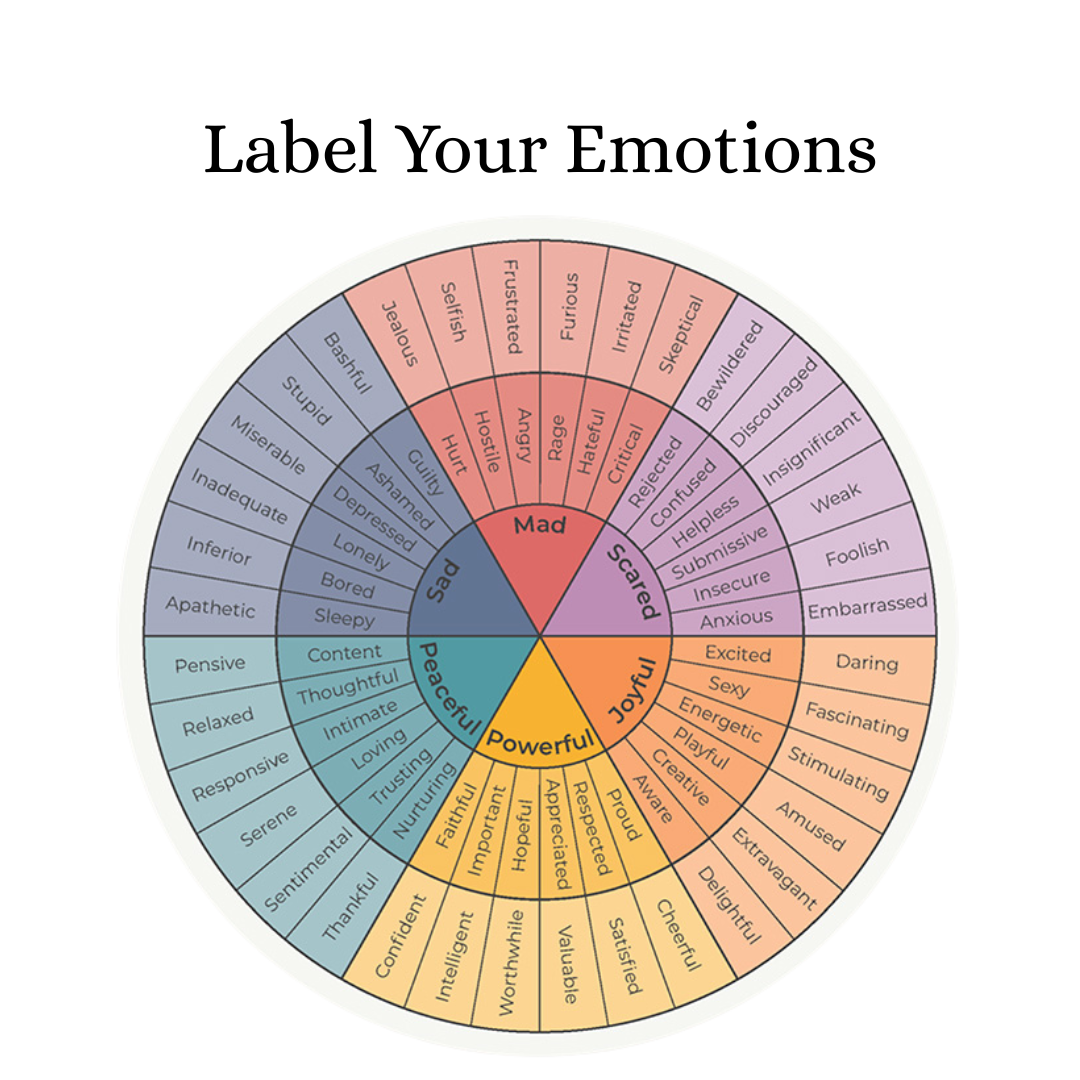
Step 1: Write down three things this holiday that bring you real joy.
Step 2: From your to-do list, circle the tasks aligned with those three things.
Step 3: Set your budget for gifts and fun, write it, track it.
Step 4: Choose two boundaries you’ll enact (time boundary, topic you’ll avoid, number of events you’ll attend).
Step 5: Schedule 15 minutes each day for your self-care anchor (walk, mindful pause, hand-wash ritual).
Step 6: Choose a meaningful way to honor loss or change this year (candle, tradition, note).
Keep this plan somewhere visible (fridge, phone wallpaper, desk). Let it remind you that this season is not about doing it all, it’s about doing what matters to you.
Final Thoughts
You do not have to be perfect, and you don’t have to do everything. What you do have to do is take care of yourself, set your limits, and align the season with what you truly value.
If the sadness or anxiety feels like too much, if you’re feeling isolated, overwhelmed, or constantly worried, you absolutely deserve support. Reach out to a licensed therapist, your doctor, or a trusted friend. You don’t have to go it alone.
Here’s to a holiday season that’s meaningful, manageable, and yes, a little more peaceful in the holler.
Want Support?
If this blog resonated with you, Counseling in the Holler, LLC is here to walk alongside you. I offer trauma-informed therapy rooted in mindfulness, DBT, and self-compassion. I also accept many major commercial insurances, KY medicare, and KY Medicaid (Passport, United Healthcare, and Wellcare).
References
American Psychological Association. (2023, November 30). Holiday season stress. APA News. https://www.apa.org/news/press/releases/2023/11/holiday-season-stress (American Psychological Association)
Harvard Medical School. (n.d.). Holiday stress and the brain. HMS Publications Archive. https://hms.harvard.edu/news-events/publications-archive/brain/holiday-stress-brain (Harvard Medical School)
Hopkins Medicine. (n.d.). 4 mindful tips to de-stress this holiday season. https://www.hopkinsmedicine.org/health/wellness-and-prevention/4-mindful-tips-to-destress-this-holiday-season (Hopkins Medicine)
UCLA Health. (2023, December 6). Coping with holiday stress. https://www.uclahealth.org/news/article/coping-with-holiday-stress (UCLA Health)
UC Davis Health. (2023, December 12). 10 tips to reduce stress and take care of yourself during the holidays. https://health.ucdavis.edu/blog/cultivating-health/10-tips-to-reduce-stress-and-care-for-yourself-during-the-holidays/2023/12 (UC Davis Health)
Balance Psych Services. (2023). How to set boundaries with family over the holidays. https://www.balancepsychservices.ca/post/setting-boundaries-during-holidays (BalancePsychServices)
UC Davis Health. (2024, March). How to set boundaries and why it matters for your mental health. https://health.ucdavis.edu/blog/cultivating-health/how-to-set-boundaries-and-why-it-matters-for-your-mental-health/2024/03 (UC Davis Health)
Mind & Strength. (n.d.). Having a plan for the holidays: Setting boundaries. https://mindandstrength.net/setting-boundaries-for-holidays/ (Mind and Strength -)
SAMHSA. (2023, November 27). Supporting your mental health during the holiday season. https://www.samhsa.gov/blog/supporting-your-mental-health-during-holiday-season (SAMHSA)
Scripps Health. (n.d.). 10 ways to cope with difficult relatives during the holidays. https://www.scripps.org/news_items/5074-10-ways-to-cope-with-difficult-relatives-during-the-holidays (Scripps.org)